
Most people think email marketing is about making things look good. They're wrong.
Email marketing is about making things work, and things that work are built on discipline, not inspiration.
I learned this the hard way, studying the Udemy course “Klaviyo Email Marketing for Dropshipping with Shopify”. What I thought would be a lesson in templates became a masterclass in human psychology.
The Question That Changes Everything
Here's what separates the professionals from the amateurs: when someone abandons their cart, what question do you ask first?
If you ask "How do I get them back?" you're an amateur. If you ask "Why did they leave?" you're beginning to understand. If you ask "What did they need that I didn't provide?" you're becoming a professional.
The professional doesn't chase. The professional serves.
Three Conversations That Define Your Business
Every email you send is part of one of three conversations. Master these, and you master email marketing.
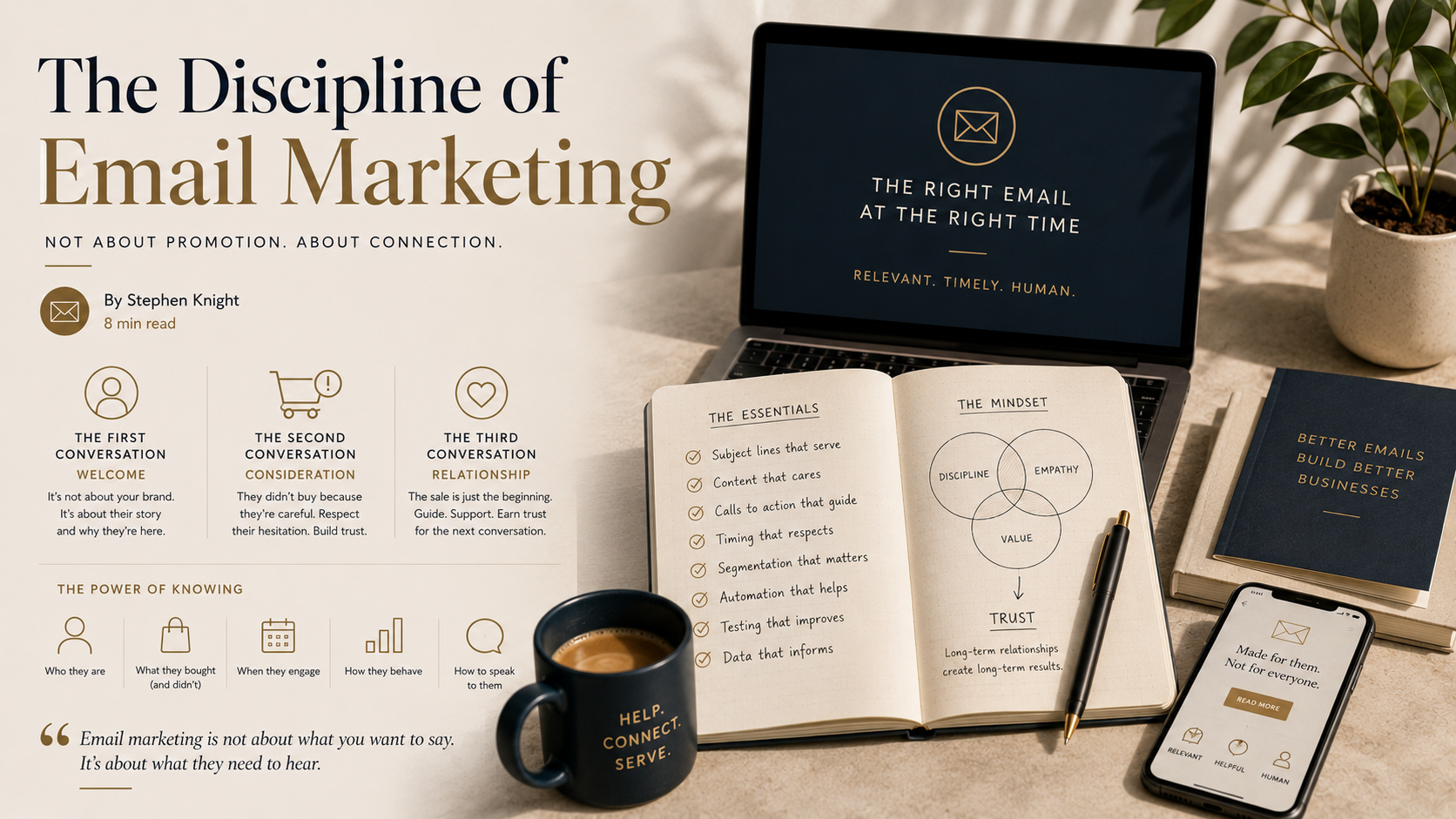
The First Conversation: Welcome. This isn't about your brand story. It's about their story. What brought them to you? What problem are they trying to solve? Your welcome flow should acknowledge their journey, not announce your achievements.
The Second Conversation: Consideration. Someone looked but didn't buy. They're not indecisive, they're careful. Your abandoned cart sequence should respect this caution, not exploit it. Show them you understand their hesitation. Address their concerns before they voice them.
The Third Conversation: Relationship. After purchase, most brands go silent. This is where amateurs reveal themselves. The professional knows the sale is just the beginning. Guide them to success with what they bought. Teach them. Support them. Earn their trust for the next conversation.
The Power of Knowing
Klaviyo and Shopify together create something remarkable: genuine understanding. You know who bought what, when they bought it, what they looked at but didn't buy, how much they've spent, when they last engaged.
Someone who bought skincare but never cosmetics? They care about health, not appearance. Someone who buys every month on the same day? They're methodical, possibly buying for someone else. Someone who only buys during sales? They're budget-conscious, not cheap.
Each person tells you exactly how to speak to them. Your job is to listen.
The Mistake Everyone Makes
You want to know the biggest mistake in email marketing? Treating everyone the same.
That first-time buyer who spent £20? They need reassurance, guidance, proof they made the right choice.
That customer who's spent £500 over six months? They need recognition, exclusive access, reasons to feel special.
That person who browses every week but never buys? They need education, not promotion.
One message for everyone is no message for anyone.
The Elements That Matter
Forget about fonts and colours for a moment. Here's what actually matters:
Subject lines that serve: Not clever, not cute, helpful. “Your order is on its way” beats “Surprise incoming!” every time.
Content that cares: Every word should answer one question: "What's in this for me?" If you can't answer that, delete the sentence.
Calls to action that guide: Don't just tell them what to do. Tell them why it matters. “Complete your order” is a command. “Get the relief you've been looking for” is an invitation.
Timing that respects: Send emails when people want them, not when you remember to send them.
The Hard Part
The hard part isn't learning the software. The hard part is learning restraint.
You'll want to send more emails. Don't. You'll want to use more colours. Don't. You'll want to say more things. Don't.
The best email campaigns feel effortless because they are ruthlessly focused. Every element serves the recipient, not the sender.
What Success Looks Like
You know you're doing it right when people reply to your emails with questions, not unsubscribes. Your abandoned cart recovery rate improves because people trust your guidance. Your post-purchase emails generate more sales than your promotional emails. Your customers defend your brand when others criticise it.
This isn't about conversion rates or click-through rates. This is about building relationships that last.
The Responsibility
When someone gives you their email address, they're not giving you permission to sell to them. They're giving you permission to help them.
This is a responsibility, not an opportunity. Handle it with care. Treat it with respect. Use it to serve, not to take.
The best email marketers don't design emails, they design experiences. They don't send messages, they continue conversations.
You want to know if your email marketing is working? Ask yourself this: if you received this email from a stranger, would you be grateful?
If the answer is no, start over. If the answer is yes, send it. If the answer is “I'd forward it to a friend,” you're becoming a master.
Email marketing is not about what you want to say. It's about what they need to hear. When you understand the difference, everything changes.